One of the most common misconceptions in the land business is the idea that land valuation is simple. Many people assume that if you know the acreage and have a rough idea of what nearby land is sold for, the value should be easy to calculate. In practice, it is rarely that straightforward.
Land is one of the most nuanced asset classes in real estate because value is shaped by much more than size alone. Acreage matters, but acreage by itself does not tell the full story. Two properties with the same number of acres can have dramatically different market value based on location, access, topography, rights, improvements, usability, layout, buyer demand, and likely future use.
This is one of the clearest reasons land is different. A residential property is often valued around the home, condition, square footage, features, and nearby comparable sales. Land, by contrast, is often valued through a broader analysis of what the property is, what it offers, what it can realistically support, how the market sees it, and which buyer pool is most likely to respond.
Because land is not just another listing, it should not be valued as though all acreage is equal.
Why Land Valuation Is Different
Land valuation is different because land is not a uniform product. A 20-acre tract may be worth more than a 40-acre tract in the same county depending on access, topography, road frontage, buildability, water features, rights status, views, location, surrounding uses, or development potential.
A heavily wooded parcel may appeal strongly to a recreational buyer but less to a farming buyer. A tract with strong tillable ground may generate more interest than a similar-sized parcel with poor soils and limited utility. A smaller parcel in a high-demand location may outperform a larger remote parcel because of convenience, scarcity, and the type of buyer it attracts.
The important point is this: land value is shaped by the relationship between the property and the market. That is why proper land valuation requires interpretation, not just arithmetic.
Why Price Per Acre Is Not Enough
One of the most common shortcuts in land pricing is the use of a simple price-per-acre approach. Price per acre can be helpful as a reference point. It can provide useful context in some situations. But by itself, it is not a complete valuation method.
The danger comes when people assume:
all acres are equally valuable
one nearby sale establishes value
larger tracts should simply be multiplied from smaller tract prices
the market treats recreational land, farmland, development land, and rural homesites the same way
physical limitations do not materially affect the number
That is not how the land market works.
Some acres are highly usable. Some are steep, wet, irregular, landlocked, or functionally limited. Some are improved by frontage, utilities, water, or views. Some are burdened by access issues, rights issues, or title concerns. Some are more valuable because of scarcity, location, or a very specific buyer profile.
Price per acre can be part of the conversation, but it should never be the entire conversation.
Factors that Increase Land Value
Land value is influenced by a combination of location, physical characteristics, access, utilities, zoning, market demand, and the ways a property can realistically be used. While every tract is different, several factors can increase the value and marketability of land:
Good road frontage and legal access: Properties with direct frontage on a public road and clearly established legal access are typically easier to finance, develop, and resell.
Available utilities: Access to public water, sewer, electricity, natural gas, and high-speed internet can make land more attractive for residential, commercial, or development uses.
Favorable zoning and permitted uses: Zoning that allows residential construction, agriculture, commercial activity, subdivision, or other desirable uses can broaden the property's potential buyer pool.
Development potential: Land that can be subdivided or developed may command a premium, particularly in areas experiencing residential or commercial growth.
Suitable soils and perc potential: For properties without public sewer, soils capable of supporting an approved septic system can be an important component of residential building value.
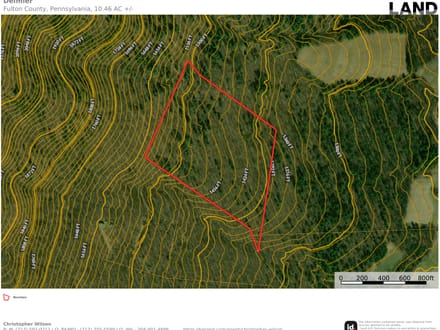
Desirable topography: Level to gently rolling terrain is often easier and less expensive to build on, farm, maintain, or develop.
Water features: Streams, ponds, springs, lakes, and other water resources may add recreational, agricultural, wildlife, or aesthetic value.
Timber and natural resources: Merchantable timber and other marketable natural resources can contribute measurable value when properly evaluated.
Agricultural productivity: Productive soils, established fields, fencing, barns, water sources, and infrastructure can increase the value of farm and ranch properties.
Recreational and hunting attributes: Quality wildlife habitat, trail systems, diverse terrain, food-plot locations, water sources, and strong hunting opportunities can increase demand for recreational land.
Views and privacy: Mountain views, water views, scenic surroundings, seclusion, and larger buffers from neighboring properties can command premiums in some markets.
Proximity to desirable locations: Convenient access to employment centers, highways, schools, recreational areas, public lands, lakes, and growing communities can positively affect land value.
Clear boundaries and good title: Recent surveys, identifiable boundary lines, documented access, and a marketable title can reduce uncertainty for prospective buyers.
Income-producing potential: Existing farm leases, timber income, hunting leases, mineral arrangements, renewable-energy opportunities, or other legitimate income streams may enhance a property's investment appeal.
Factors that Decrease Land Value
Just as certain characteristics can enhance land value, physical, legal, environmental, and access-related issues may reduce a property's marketability or limit what a buyer can do with it. Factors that can decrease land value include:
Lack of legal access or landlocked status: Property without documented access to a public road can be substantially more difficult to finance, develop, and sell.
Poor or limited road frontage: Inadequate frontage may restrict driveway placement, subdivision possibilities, or development options.
Steep or difficult terrain: Severe slopes, rocky terrain, unstable soils, or other challenging conditions can increase construction and infrastructure costs.
Wetlands or floodplain: Significant wetlands, flood zones, drainage problems, or frequently saturated areas may limit usable acreage and development potential.
Failed or unsuitable septic conditions: In areas without public sewer, poor soils or an inability to obtain an acceptable septic approval can significantly restrict residential use.
Limited utility availability: The cost of extending electricity, water, sewer, broadband, or other utilities over long distances can affect what buyers are willing to pay.
Restrictive zoning or land-use regulations: Zoning limitations, conservation restrictions, subdivision requirements, or other regulations may prevent a buyer's intended use.
Problematic easements or rights-of-way: Utility corridors, pipelines, transmission lines, shared access, or other easements can reduce usable acreage or interfere with development plans.
Title or boundary issues: Unresolved ownership questions, encroachments, disputed boundaries, gaps in title, or unclear rights-of-way can create uncertainty and negatively affect marketability.
Environmental concerns: Contamination, dumping, abandoned structures, previous industrial uses, or environmental remediation requirements can reduce property value and increase buyer risk.
Excessive clearing or poor land management: Severe erosion, unmanaged logging, invasive vegetation, damaged roads, or poorly maintained fields can negatively affect both appearance and usability.
Nearby adverse uses: Heavy industrial activity, landfills, high-voltage transmission corridors, excessive noise, or other incompatible neighboring uses may affect buyer demand.
Limited usable acreage: A parcel may contain substantial total acreage while having relatively little acreage that is practical for building, farming, recreation, or development.
Market limitations: Even an attractive property can be affected by weak local demand, limited economic activity, high inventory, or a small pool of buyers for its particular land type.
No single characteristic determines what land is worth. The strongest land valuations consider the property as a whole; including its location, access, permitted uses, physical features, available infrastructure, comparable sales, and current market demand. Buyers should conduct appropriate due diligence before purchasing, and landowners considering a sale should work with a real estate professional who understands how these factors interact in the local land market.
Location Still Matters
Just as in other forms of real estate, location remains one of the strongest value drivers in land. But in the land market, location means more than just proximity to a town or a recognizable address.
Location may influence value through:
buyer demand in the immediate area
commute patterns
road network access
proximity to population centers
agricultural strength of the region
recreational desirability
neighboring land uses
future growth patterns
school district relevance for homesite buyers
regional scarcity of similar tracts
A tract located in a high-demand rural corridor may command stronger pricing than a seemingly similar tract in a less active market. Likewise, land near expanding residential or commercial pressure may attract different pricing dynamics than more remote acreage used strictly for agriculture or recreation.
Location helps determine not only value, but also the kind of buyer most likely to recognize and pay for that value.
Land Type Affects Value
Different land types are valued through different lenses.
For example:
recreational land may be influenced by privacy, habitat, water, terrain, and access
hunting land may be shaped by wildlife appeal, layout, cover, food sources, and neighboring use
farmland may depend more on soil productivity, tillable acreage, drainage, layout, and agricultural utility
timberland may carry value tied to wooded character, timber condition, access, and long-term use
rural homesites may be influenced by buildability, utilities, road frontage, views, and convenience
development land may be driven by zoning, infrastructure, frontage, density potential, and future use feasibility
This is one reason land valuation requires classification before pricing. A property cannot be valued intelligently if its strongest identity in the market is not first understood.
Highest and Best Use Shapes Market Value
One of the most important concepts in land valuation is highest and best use. Land is often worth what the market believes it can realistically and supportably become, not merely what it has been used for in the past or what someone hopes it might become in the future.
That means the valuation process should consider:
what use is legally permissible
what use is physically possible
what use is financially feasible
what use is most productive in the current market
A tract with legitimate residential or development potential may be worth more than its current agricultural use alone suggests. On the other hand, a seller’s belief that land “ought to be development land” does not automatically mean the market agrees.
Value follows supportable use, not wishful use.
Access Is a Major Value Driver
Access can materially increase or reduce land value. A property with direct, usable public road frontage is often viewed differently from one that depends on a shared lane, private road, easement route, or uncertain access arrangement.
A tract with strong legal and physical access is generally easier to use, easier to finance, easier to explain, and easier to market. By contrast, unclear, inconvenient, limited, or disputed access may narrow the buyer pool and reduce pricing strength.
Access affects value because it affects confidence, usability, and long-term ownership experience.
Topography and Terrain Matter
The shape of the land plays a major role in valuation. Topography affects:
buildability
farm utility
drainage
road and driveway feasibility
recreational use
visibility
privacy
cost of improvement
subdivision potential
equipment access
Flat or gently rolling usable land may be valued differently from steep, broken, or heavily constrained terrain. That does not mean rough land has no value. In fact, rugged terrain may be desirable in certain recreational settings.
The key is that terrain must be understood in relation to use. The market pays differently for land depending on what the terrain allows and what it limits.
Road Frontage and Configuration Influence Value
Road frontage is often one of the clearest physical value drivers in land. Frontage can affect:
access
visibility
buildability
development potential
subdivision possibilities
ease of marketing
buyer confidence
Parcel configuration also matters. A well-shaped tract may be more usable than an irregular one. Narrow, awkward, segmented, or difficult-to-use shapes can reduce flexibility. A large tract with poor internal layout may not function as well as a smaller but cleaner tract.
In land, geometry matters more than many people expect.
Utilities and Infrastructure Can Change the Pricing Story
Utility availability can have a major effect on land value, especially for homesites, development land, and commercial land.
Relevant considerations may include:
electric availability
public water or sewer access
septic or perc feasibility
well potential
internet availability
road condition
infrastructure proximity
development readiness
A tract with clear utility options may command stronger pricing than a similar tract requiring extensive site work, uncertain septic feasibility, or major infrastructure extension.
This is especially important because buyers are often paying not just for land itself, but for the cost and ease of turning it into usable property.
Water Features Can Add or Complicate Value
Water can be one of the strongest positive features in land valuation, but it can also introduce limitations.
Water-related value influences may include:
ponds
streams
creeks
river frontage
lake access
scenic appeal
livestock use
wildlife support
recreational use
irrigation potential
At the same time, water can also introduce:
floodplain concerns
wetland restrictions
erosion issues
setback limitations
access complications
engineering challenges
A water feature is not automatically a premium in every context. Its impact depends on the type of land, the intended use, and how the market perceives the feature.
Tillable Acreage and Agricultural Utility
For farmland and mixed-use tracts, the amount and quality of tillable acreage can be a central value driver.
Important considerations may include:
percentage of tillable ground
field configuration
access for equipment
soil productivity
drainage
tenancy or lease structure
surrounding agricultural use
efficiency of operation
Two farms with the same gross acreage may have very different value if one is significantly more usable, productive, and efficient than the other.
That is why agricultural land should not be valued the same way as purely recreational or residential acreage.
Timber Value May Matter, but It Should Not Be Guessed At
Wooded land often creates strong buyer appeal, but the presence of trees is not the same thing as documented timber value.
Timber may influence value through:
species
maturity
density
harvest history
access for removal
forest health
habitat benefit
long-term stewardship potential
In some cases, timber contributes meaningfully to the value story. In others, it is more of a recreational, aesthetic, or privacy feature than a true merchantable asset.
A land professional should be careful not to overstate timber value without support. Wooded character can absolutely matter, but precision matters too.
Rights and Title Considerations Affect Value
The rights associated with the tract can materially affect value. This may include:
oil, gas, and mineral rights
timber rights
access rights
easements
restrictions
surface-only ownership
title issues
unresolved encroachments
uncertain legal descriptions
A tract with intact and transferable rights may be perceived differently than one where certain rights have been severed, reserved, or clouded. Even where buyers are primarily focused on surface use, rights issues can still affect risk, confidence, and future marketability.
Clear ownership and clear conveyance usually support stronger value than uncertainty.
Improvements Can Add Value Differently Than in Residential Real Estate
Some land includes improvements such as:
barns
sheds
fencing
internal roads
trails
gates
utilities
ponds
hunting structures
farm infrastructure
These improvements may add value, but not always in the same way residential improvements are valued.
The real question is whether the improvement increases utility, buyer appeal, and market demand for the property’s likely use. A useful equipment building on farmland may add value differently than an older outbuilding on a recreational parcel. Internal trails may be highly valuable to one buyer pool and only modestly relevant to another.
In land, improvements must be analyzed in context.
Scarcity and Buyer Pool Size Matter
Some land commands stronger pricing simply because there is very little comparable inventory available.
Scarcity may occur when a tract offers:
a desirable size range
rare waterfront
premium hunting characteristics
a strong location corridor
a hard-to-find homesite setting
quality tillable acreage in a tight market
strategic adjacency to neighboring owners
strong development positioning in a growth area
Scarcity influences value because the market is not always pricing land against a deep inventory of interchangeable alternatives. Some parcels are competitive because they offer something the market does not see often.
Buyer pool size matters too. A smaller niche buyer pool may reduce liquidity even if the property is highly appealing to the right person. A broader buyer pool may strengthen market response and support pricing.
Land Appraisal vs. Comparative Market Analysis (CMA)
Landowners often hear the terms appraisal and Comparative Market Analysis (CMA) used when discussing property value, but they serve different purposes.
A land appraisal is a formal opinion of value prepared by a licensed or certified real estate appraiser. Appraisals are commonly required by lenders when financing is involved and may also be used for estates, litigation, tax matters, conservation transactions, or other situations requiring an independent valuation. The appraiser analyzes relevant comparable sales along with factors such as location, access, zoning, highest and best use, topography, utilities, improvements, development potential, and other characteristics that may influence value.
A Comparative Market Analysis (CMA) is typically prepared by a real estate professional to help determine an appropriate listing and marketing price. A land-focused agent evaluates recent sales, competing properties, market activity, acreage, property characteristics, buyer demand, and other factors affecting how the property is likely to perform in the current marketplace.
The key distinction is that an appraisal establishes an independent opinion of value for a specific purpose, while a CMA helps a seller make an informed pricing and marketing decision.
In some transactions, both may be useful. A landowner may rely on a knowledgeable land professional to establish a competitive listing strategy, while a buyer's lender may later order an independent appraisal to support the financing.
For land in particular, comparable properties are rarely identical. Two parcels containing the same number of acres can have very different values depending on access, usable acreage, zoning, utilities, soils, timber, water features, development potential, recreational attributes, and location. That is why land valuation requires more than simply calculating a price per acre.
Comparable Sales Still Matter, but They Require Interpretation
Comparable sales remain a key part of land valuation, but they require more adjustment and judgment than many people realize.
A good land comparable is not simply:
nearby
recent
vaguely similar in size
It should also be analyzed for:
land type
use characteristics
location quality
access
topography
rights
road frontage
improvements
water features
market context
timing
In many land markets, perfect comparables are limited. That means the professional has to interpret the available data thoughtfully rather than rely on easy formulas.
This is one reason land valuation demands experience and discipline.
How to find out what my land is worth
If you are asking, “How do I find out what my land is worth?”, the most reliable answer usually comes from combining professional market analysis with property-specific due diligence.
Here are several ways to estimate land value:
Ask a land specialist for a Comparative Market Analysis (CMA): A real estate professional who specializes in land can review recent comparable sales, competing listings, acreage, access, zoning, utilities, topography, improvements, recreational attributes, development potential, and current buyer demand. A CMA is often the best starting point for a landowner considering a sale because it is designed to help establish a realistic listing and marketing strategy.
Request a licensed appraisal: A licensed or certified real estate appraiser can provide a formal opinion of value. An appraisal may be appropriate when a lender requires one or when the property is being valued for an estate, legal matter, tax purpose, partnership dispute, or other situation requiring an independent valuation.
Review recent comparable land sales: County deed records, property records, MLS data, and other reliable sales sources can help identify what similar properties have actually sold for. However, comparing land requires more than looking at acreage and sale price. Access, zoning, usable acreage, utilities, soils, timber, water features, location, and highest and best use can create substantial differences between otherwise similar parcels.
Be cautious with online home-value tools: Automated valuation tools such as Zillow and similar websites can be useful for some residential properties, but they are often much less reliable for rural land, farms, timberland, recreational acreage, and unique properties. These systems may not adequately account for characteristics such as legal access, topography, perc potential, timber value, conservation restrictions, mineral rights, water features, or development potential.
For most landowners, the best first step is to speak with a real estate professional who regularly works with the specific type of land being evaluated. A knowledgeable land specialist can help identify the factors that influence value, locate meaningful comparable sales, and explain how the property is likely to be positioned in the current market.
Remember, land value is rarely determined by acreage alone. Two properties with the same number of acres, and even properties located near one another, can have significantly different market values depending on their physical characteristics, legal rights, permitted uses, improvements, and buyer demand.
Why Emotion and Legacy Can Distort Pricing Expectations
Land often carries emotional value. Families may have hunted the tract for decades. A farm may have been in the family for generations. A rural parcel may represent memory, identity, or long-held plans.
Sellers may see the land not only as an asset, but as something deeply personal. That perspective is understandable. But emotional value and market value are not always the same.
A land specialist must be able to respect the emotional significance of the property while also helping the seller understand how the market is likely to respond to its actual features, strengths, risks, and limitations.
Why Overpricing Land Can Be Especially Costly
Overpricing is a problem in any form of real estate, but it can be especially damaging in land.
Land often has:
a smaller buyer pool
a more specialized audience
longer marketing cycles
more due diligence questions
fewer casual or impulse buyers
If the property is overpriced, it may sit longer, attract weaker interest, create stigma in the market, and ultimately require more correction later. Because land buyers tend to study tracts more carefully, unrealistic pricing is often exposed sooner than sellers expect.
The stronger the pricing strategy at the beginning, the stronger the property’s position in the market.
Common Mistakes People Make When Valuing Land
One common mistake is relying entirely on price per acre. Another is assuming all acreage is equally usable and equally valuable. A third is overestimating future development potential without support. A fourth is ignoring access, rights, title concerns, or physical constraints. A fifth is failing to identify the true likely buyer and how that buyer evaluates the tract. A sixth is letting emotional value dominate market analysis.
Why Valuation Matters So Much in Land Brokerage
Valuation matters because it shapes:
seller expectations
marketing strategy
buyer response
negotiation leverage
days on market
credibility of the listing
long-term transaction success
When land is valued thoughtfully, it can be positioned with greater clarity and confidence. When it is valued carelessly, the entire marketing strategy is weakened from the beginning.
Because land is not just another listing, proper valuation is not just a pricing exercise. It is one of the most important forms of interpretation in the entire transaction.
Frequently Asked Questions
How is land valued?
Land is valued by analyzing recent comparable sales and adjusting for the characteristics that make a particular property more or less desirable. Important factors may include location, acreage, legal access, road frontage, zoning, topography, utilities, soils, septic suitability, timber, water features, improvements, development potential, recreational attributes, and current buyer demand.
Unlike many residential properties, land can vary significantly from one parcel to another, so accurate valuation requires looking beyond acreage and price per acre.
Why is price per acre not enough to value land?
Price per acre is a useful comparison tool, but it is not a complete valuation method.
Two properties with the same acreage can have dramatically different values because of differences in access, location, terrain, zoning, utilities, usable acreage, soils, timber, water, development potential, and permitted uses.
For example, 50 acres with public-road frontage, utilities, approved septic sites, and subdivision potential may be worth substantially more than 50 landlocked acres with steep terrain and limited usable ground.
For that reason, price per acre should be viewed as a metric—not as the sole basis for determining land value.
What factors increase land value the most?
The factors that increase land value the most depend on the property's location and highest and best use, but commonly include:
Legal and convenient road access
Strong road frontage
Desirable location
Available utilities
Favorable zoning
Development or subdivision potential
Suitable soils and septic potential
Usable topography
Productive farmland
Merchantable timber
Water features
Recreational and hunting attributes
Scenic views and privacy
Income-producing potential
Clear title and well-defined boundaries
The greatest value is often created when several desirable characteristics occur together.
What factors decrease land value?
Factors that can negatively affect land value include:
No legal access or landlocked status
Limited or poor road frontage
Steep or difficult terrain
Wetlands or floodplain
Poor soils or failed septic testing
Lack of utilities
Restrictive zoning or land-use regulations
Problematic easements or rights-of-way
Boundary or title disputes
Environmental concerns
Limited usable acreage
Nearby incompatible land uses
High development or infrastructure costs
Weak local buyer demand
A property's total acreage may sound impressive, but the amount of usable and marketable acreage can be more important than the total number of acres.
How do I find out what my land is worth?
A good starting point is to have a land specialist prepare a Comparative Market Analysis (CMA) based on recent comparable sales, competing properties, current market conditions, and the specific characteristics of your land.
Landowners can also:
Obtain a licensed or certified appraisal
Review recent recorded land sales
Research county property and deed records
Evaluate zoning, access, utilities, soils, and development potential
Review any timber, agricultural, recreational, or income-producing value
Online valuation tools should be used cautiously for rural land. Automated estimates may not accurately account for characteristics such as access, topography, septic suitability, timber, water resources, easements, mineral rights, or development potential.
For landowners considering a sale, working with a real estate professional who regularly specializes in land is typically one of the best ways to establish a realistic market and listing strategy.
How is a land CMA different from a land appraisal?
A Comparative Market Analysis, or CMA, is generally prepared by a real estate professional to help a property owner determine an appropriate listing price and marketing strategy. It considers comparable sales, competing listings, property characteristics, current market activity, and buyer demand.
A land appraisal is a formal opinion of value prepared by a licensed or certified real estate appraiser. Appraisals are commonly required by lenders and may also be used for estates, legal proceedings, tax matters, partnerships, or other situations requiring an independent valuation.
The primary distinction is simple:
A CMA helps determine how a property should be positioned and priced in the current real estate market, while an appraisal provides a formal independent opinion of value for a specific purpose.
In some situations, a landowner may benefit from both.
Final Takeaway
Land value is not determined by acreage alone. It is shaped by land type, highest and best use, location, access, topography, road frontage, utilities, water rights, improvements, comparable sales, scarcity, and the specific buyer pool likely to respond to the property.
The better those factors are understood, the more accurately the land can be priced and the more effectively it can be positioned for the market. In the land business, value is not just measured. It is interpreted.
Next Steps
This article is part of a broader series designed to break down how land works from a practical, real-world perspective. Understanding how land is valued is essential to pricing and interpreting market behavior, but it connects directly to how land is classified and how buyers determine what a property is actually worth.
To understand how land is categorized and how different property types influence value, demand, and buyer behavior, explore the following blog:
→ Types of Land for Sale: A Complete Guide
To understand how intended use and potential use drive value and ultimately shape pricing decisions, explore the following blog:
→ What Is Highest and Best Use in Real Estate?
Closing Statement
Land valuation requires more than simple formulas and surface assumptions. It requires a disciplined understanding of what the property is, what it offers, what it can support, and how the market is likely to respond. In land brokerage, accurate valuation is one of the foundations of strong representation.
About the Author
Christopher Wilson is an Associate Broker, Realtor®, ABR®, SRES®, Team Leader, and Land Specialist serving Pennsylvania, Maryland, and West Virginia and is a member and Regional Ambassador with the KW Land® Division. Along with actively representing clients in real estate transactions, he focuses on educating agents, landowners, buyers, and sellers on the distinct nature of land and the complexities of real estate transactions.
If you're buying, selling, or considering land in Pennsylvania, Maryland, or West Virginia, Christopher Wilson and other members of the KW Land® Division can help. Contact Christopher → or search available land listings →.
Professional Disclaimer
The information provided in this article is for general educational and informational purposes only and is based on professional real estate experience in land and related property transactions. Christopher Wilson is a licensed real estate professional and land specialist, but is not an attorney, financial advisor, tax advisor, surveyor, engineer, or certified appraiser. Nothing in this article should be construed as legal, tax, financial, appraisal, engineering, surveying, or other professional advice. Readers should consult qualified licensed professionals regarding matters specific to their property, transaction, or jurisdiction.